
Why Is AC Bill So High? Common Causes and Ways to Reduce Electricity Costs
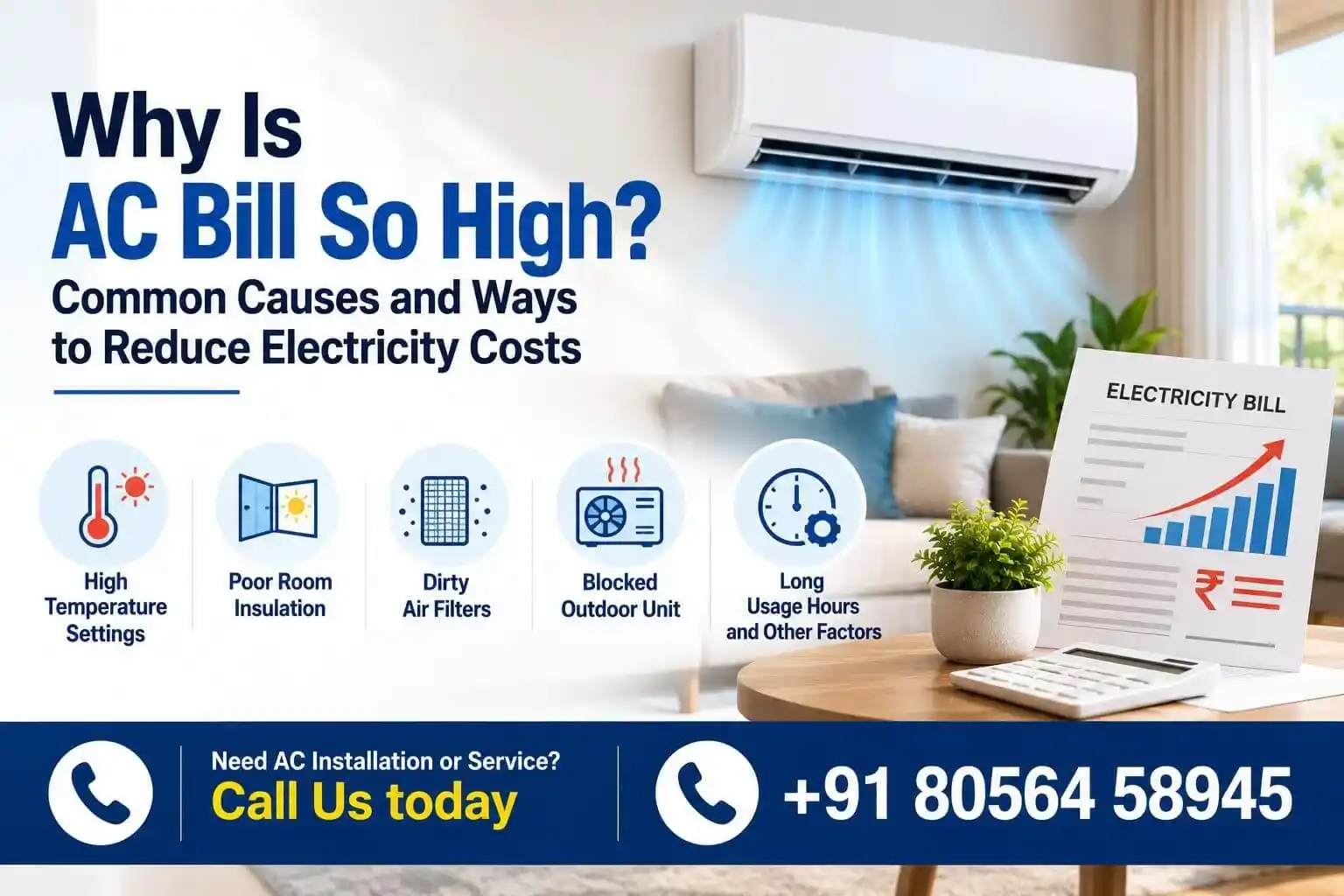
Your AC keeps the room cool, but the electricity bill at the end of the month can be a surprise. You might be using the air conditioner for the same number of hours as before, yet the bill keeps increasing. This is a common concern for households in Kanyakumari, Nagercoil and Thuckalay, especially during hot and humid months.
If you're wondering how to reduce the AC electricity bill, start by checking how your air conditioner is used and maintained. Temperature settings, room size, dirty filters and the condition of your AC can all affect electricity consumption.
Why Is AC Bill So High? Common Reasons
A high electricity bill doesn't always mean your AC is faulty. Sometimes, everyday habits make the air conditioner consume more power than necessary.
1. Setting the AC temperature too low
Setting your AC to 16°C or 18°C doesn't mean the room will cool faster. It simply makes the air conditioner work towards a much lower temperature. For most homes, setting the AC around 24°C to 26°C is a practical starting point. You can adjust it according to the weather and your comfort.
2. Dirty air filters
When AC filters collect dust, airflow becomes restricted. The room may take longer to cool, and the system may use more electricity to maintain the required temperature. Cleaning the filters regularly helps maintain proper airflow and cooling performance.
3. Poor room insulation
If sunlight enters through uncovered windows or cool air escapes through gaps around doors, your AC has to handle additional heat. Using curtains, closing doors and sealing noticeable gaps can reduce unnecessary cooling demand.
4. Low refrigerant levels
Refrigerant helps your AC remove heat from the room. If there is a leak, cooling performance can drop, and the unit may run longer than usual. If your AC takes an unusually long to cool, arrange a professional inspection. Refrigerant should not need regular topping up in a properly sealed system.
5. Running the AC for long hours
Using an AC throughout the day naturally increases electricity consumption. Running it in an empty room or keeping it switched on longer than necessary adds to the bill.
Understanding AC Electricity Consumption
AC electricity consumption depends on the unit's cooling capacity, energy efficiency, operating hours and room conditions.
A 1-ton AC and a 1.5-ton AC won't necessarily use the same amount of electricity. Their actual consumption depends on how hard they work to cool the room.
For example, if an AC draws an average of 1.2 kW while operating for eight hours, it consumes approximately 9.6 electricity units that day. Actual usage varies because inverter ACs adjust compressor speed as cooling requirements change.
You can also check the BEE energy label to understand the estimated annual electricity consumption of an air conditioner.
How AC Capacity and Room Size Affect Your Bill
Choosing the correct AC capacity is important for both cooling and electricity expenses.
A small AC installed in a large room may struggle to reach the selected temperature. An unnecessarily large unit can also be an inefficient choice, depending on its technology and operating conditions.
When selecting an AC, consider:
- • Room size and ceiling height.
- • Amount of direct sunlight.
- • Number of people regularly use the room.
- • Windows, ventilation and insulation.
- • Daily operating hours.
For anyone searching for the best AC for home in Kanyakumari, checking the room's cooling requirements before purchasing is more useful than choosing based on tonnage alone.
How to Save Electricity with AC Without Losing Comfort
You don't have to stop using your air conditioner to reduce electricity expenses. A few changes in your daily routine can help.
Maintain a comfortable temperature
Start with 24°C to 26°C instead of selecting the lowest temperature. The Bureau of Energy Efficiency recommends approximately 24°C to 25°C as an energy-conscious cooling range.
Use sleep mode at night
Many modern air conditioners include sleep mode, which gradually adjusts the temperature to prevent excessive cooling during the night.
Set the timer
If you only need cooling for a few hours, use the timer to switch off the AC automatically. For example, you can set the timer before sleeping instead of leaving the air conditioner running until morning.
Use a ceiling fan
A ceiling fan helps circulate cool air around the room. You may feel comfortable at a slightly higher AC temperature when the fan is running.
Keep sunlight out
Close curtains during the hottest hours, particularly in rooms with west-facing windows. Reducing direct sunlight helps prevent the room from heating up unnecessarily.
These are simple ways to understand how to save electricity with AC while keeping your home comfortable.
Does an Energy-Efficient Air Conditioner Reduce Electricity Bills?
An energy-efficient air conditioner can help reduce electricity expenses, particularly in homes where the AC runs for several hours every day.
Inverter air conditioners adjust compressor speed according to cooling demand instead of repeatedly operating at full capacity. When comparing models, check the BEE star rating and Indian Seasonal Energy Efficiency Ratio (ISEER). A higher efficiency rating generally indicates lower electricity use under standard test conditions.
Daikin offers inverter air conditioners with energy-saving features such as Econo Mode, which limits maximum power consumption, and Good Sleep Off Timer, which adjusts cooling during sleep. Feature availability depends on the model.
Before purchasing, compare the expected electricity consumption, room requirements and daily usage rather than relying on the star rating alone.
Why Regular AC Servicing Helps Reduce Power Consumption
Dust accumulation, blocked airflow and problems with cooling components can affect performance. An AC that struggles to cool the room may operate longer and consume additional electricity.
Professional servicing can include filter cleaning, coil inspection, drainage checks, electrical inspection and refrigerant leak checks when required.
If you notice weak cooling, unusual sounds, water leakage or an unexpected increase in AC power consumption, get the unit inspected. For homeowners looking for AC service in Nagercoil, discussing these symptoms with a technician can help identify the actual problem.
Regular maintenance is equally useful for households using air conditioning in Thuckalay, where heat, humidity and frequent AC usage can place additional demands on cooling systems.
Choose the Right AC with Cold Air Conditioning
If your electricity bill remains high despite changing your AC settings and cleaning the filters, check whether the unit is suitable for your room.
At Cold Air Conditioning, you can enquire about air conditioner options, discuss your cooling requirements and seek information about available services. Choosing the correct capacity, understanding energy-saving features and maintaining your AC properly can help you manage electricity expenses.
If you're looking for practical advice on how to reduce the AC electricity bill, begin with your temperature settings, operating hours and maintenance routine before deciding whether an upgrade is necessary.
FAQ
1. What is the best AC temperature to save electricity?
Setting your AC around 24°C to 26°C is a good starting point for most homes. Adjust the temperature according to humidity, room conditions and personal comfort.
2. Does running an AC at 18°C increase electricity consumption?
Yes, it generally increases cooling demand compared with a higher setting. The compressor may need to operate longer or harder to maintain 18°C.
3. How many electricity units does a 1.5-ton AC consume?
Consumption depends on the model, efficiency, temperature settings and operating hours. For example, an average power draw of 1.2 kW over eight hours equals 9.6 units.
4. Does AC servicing reduce electricity bills?
Servicing can improve efficiency when dirty filters, blocked coils or mechanical problems are affecting cooling. Actual savings depend on the condition of the air conditioner.
5. Is a 5-star inverter AC better for saving electricity?
A 5-star inverter AC generally offers better rated energy efficiency than a comparable lower-star model under the same labelling standards. Compare the BEE annual energy consumption figures before buying.