
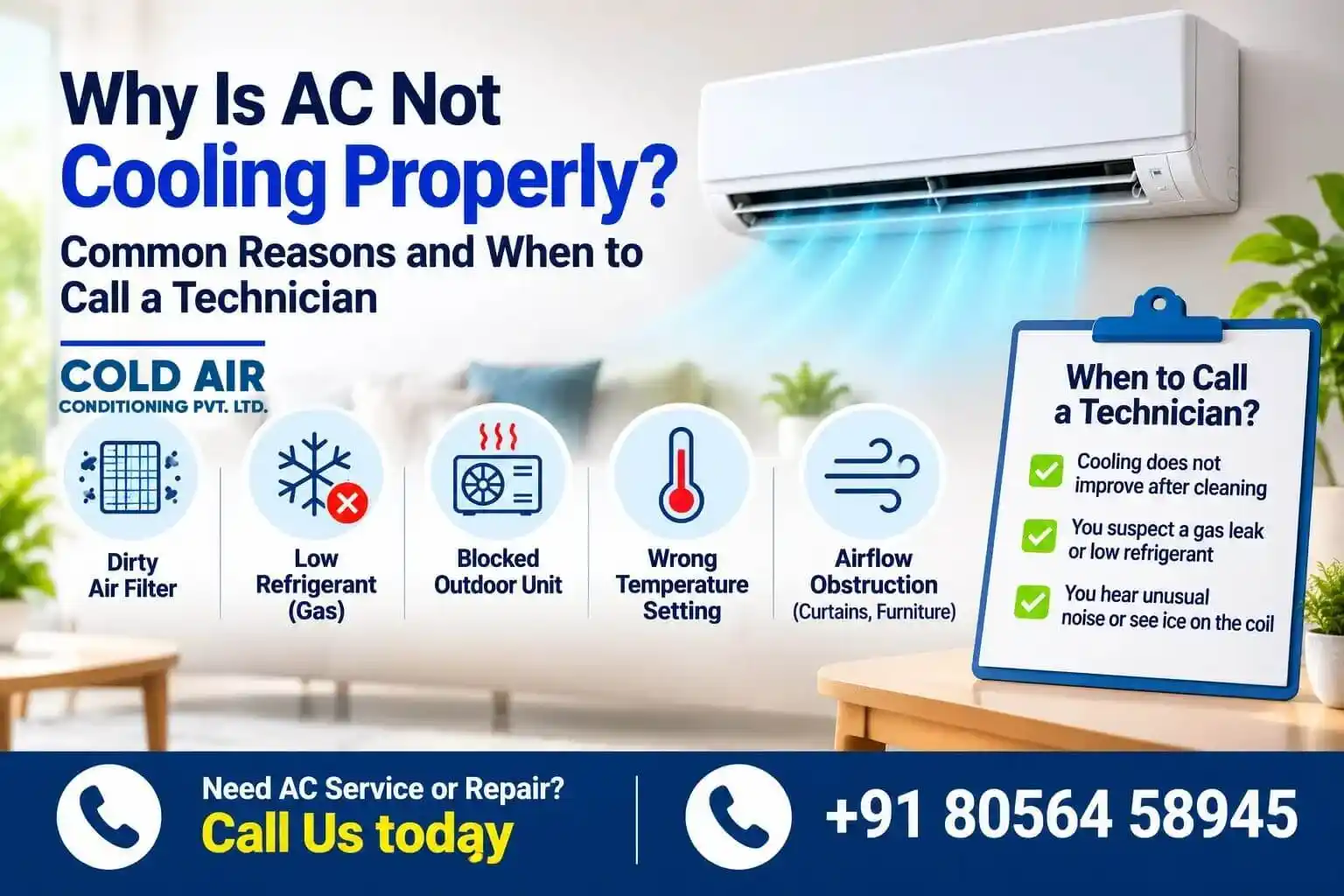
An air conditioner that runs continuously but fails to cool the room can make even a short stay indoors uncomfortable. You might notice warm air coming from the vents, weak airflow or a room that takes much longer than usual to reach the set temperature. These symptoms can have several causes, ranging from a dirty filter to a problem with the compressor.
Understanding the reason behind poor cooling helps you decide what can be checked at home and when professional attention is necessary. If the problem continues after basic checks, a technician offering AC repair in Nagercoil can inspect the unit and identify the fault.
Common Reasons Your AC Is Not Cooling Properly
An air conditioner depends on several components working together. A problem in one part can affect the cooling performance of the entire system. Here are some common reasons behind AC cooling problems.
1. Dirty or Blocked Air Filters
Air filters collect dust and other particles as the AC operates. Over time, accumulated dirt can restrict airflow through the indoor unit. As a result, the air conditioner may struggle to circulate cool air around the room.
A dirty filter can also put additional pressure on the system and affect its efficiency. Check the filter regularly and clean it according to the manufacturer's instructions. If it is damaged or heavily clogged, it may need replacement.
2. Low Refrigerant or Gas Leakage
Refrigerant absorbs heat from the indoor air and helps the AC release it outside. When the refrigerant level becomes low due to a leak, the system may not cool the room properly.
You may notice warm air, longer cooling cycles or ice forming on the indoor unit's coil. A technician needs to inspect the system, identify any leakage and check the refrigerant condition before carrying out gas filling.
If a refrigerant-related fault is suspected, professional AC gas filling service can help address the issue after the required inspection.
3. Blocked or Dirty Outdoor Unit
The outdoor unit releases the heat collected from inside the room. When dust, leaves or other obstructions block the surrounding area, heat cannot escape efficiently. This can affect cooling performance and make the system work harder.
Keep the space around the outdoor unit clear. Avoid placing objects close to its air outlets. If the coil is heavily covered with dirt, arrange professional cleaning rather than attempting to open or dismantle the unit yourself.
4. Incorrect Thermostat Settings
Sometimes, the problem is related to the settings rather than a damaged component. If the AC is set to fan mode instead of cooling mode, it will circulate air without actively cooling the room.
Check that the unit is set to cool mode and that the temperature is lower than the current room temperature. Also, make sure the thermostat is not affected by direct sunlight or another nearby heat source, as this can influence its readings.
5. Compressor Problems
The compressor plays an important role in the refrigeration cycle. It helps circulate refrigerant through the system so that heat can be transferred outside. If the compressor is not operating correctly, the AC may run without producing sufficient cooling.
Electrical faults, overheating or wear in internal components can affect compressor operation. Since compressor-related issues require technical inspection, avoid repeatedly switching the unit on and off in an attempt to fix the problem.
AC Troubleshooting: What Can Homeowners Check Safely?
Before arranging a service visit, you can carry out a few basic checks. These steps may help identify simple issues without opening the AC or handling electrical components.
- Check the operating mode: Confirm that the unit is set to Cool mode rather than Fan mode.
- Inspect the air filter: If the filter is removable and accessible, check whether it needs cleaning. Follow the manufacturer's instructions.
- Review the temperature setting: Set the temperature appropriately and allow the AC some time to respond.
- Check the outdoor area: Make sure leaves, boxes or other objects are not blocking airflow around the outdoor unit.
- Close doors and windows: Outside heat entering the room can make it harder for the AC to maintain the desired temperature.
- Observe unusual signs: Look for water dripping, ice formation or unusual sounds. Do not remove covers or attempt internal repairs.
If these checks do not improve the cooling, the issue may require a technician. You can also read our guide on AC troubleshooting and regular servicing for more information about keeping your unit in good condition.
For more details, read our guide, AC Not Cooling which explains other common causes and possible fixes.
When Should You Call an AC Technician?
Some AC problems should not be handled through basic home troubleshooting. Arrange a professional inspection if you notice any of the following signs:
- Warm air despite correct settings: The system may have a refrigerant, airflow or component-related problem.
- Ice on the indoor unit: Restricted airflow or refrigerant-related issues can cause ice formation.
- Water leakage: A blocked drain line or another internal issue may cause water to drip from the indoor unit.
- Burning smell or electrical issues: Turn off the unit at the isolator or breaker if it is safe to do so. Do not restart it until it has been inspected.
- Loud noises or strong vibrations: These may indicate loose parts, fan problems or other mechanical faults.
- Repeated cooling failure: If the same issue returns after basic checks, a technician needs to identify the underlying cause.
Simple Maintenance Tips for Better AC Cooling
Regular maintenance can reduce the chances of sudden cooling problems and help the system operate efficiently.
- Clean the air filters at suitable intervals, especially during periods of frequent use.
- Keep the outdoor unit free from leaves, dust and other obstructions.
- Arrange periodic servicing to check the filters, coils, drain pipe, fan movement and overall performance.
- Pay attention to changes in cooling time, airflow or operating sounds.
- Use suitable temperature settings instead of making frequent adjustments.
- Do not ignore minor leaks, unusual noises or repeated cooling issues.
For many home AC units, servicing once every six months is a useful general schedule. Commercial systems that operate for longer hours may need more frequent checks depending on their usage and conditions.
Get Professional Help for Persistent AC Cooling Problems
When an air conditioner continues to struggle despite basic checks, identifying the actual fault is more useful than replacing parts without a proper diagnosis. Cold Air Conditioning provides repair support for residential and commercial AC systems in Nagercoil, Thuckalay and surrounding areas. The company's technicians inspect the system to identify the cause before recommending the required repair.
Whether you need air conditioner repair in Thuckalay or assistance with a cooling issue in Nagercoil, professional inspection can help determine the right course of action. For reliable AC repair in Nagercoil, contact Cold Air Conditioning to discuss the problem and arrange a service visit. You can also explore it's AC repair services for more details.
Frequently Asked Questions
1. Why is my AC running but not cooling the room?
A dirty filter, incorrect thermostat setting, low refrigerant, blocked outdoor unit or compressor problem can affect cooling. The exact cause depends on the condition of the system.
2. Can a dirty air filter stop an AC from cooling?
Yes. A clogged filter restricts airflow and can reduce cooling performance. Cleaning it regularly helps maintain proper airflow.
3. Does low AC gas cause poor cooling?
Yes. Low refrigerant can affect the cooling cycle, but it usually indicates a leak that needs to be checked.
4. How often should I service my AC?
A home AC generally benefits from servicing once every six months. Units used heavily or in dusty environments may need more frequent attention.
5. When should I call an AC technician?
Contact a technician if the unit continues blowing warm air, leaks water, forms ice, makes unusual noises or shows signs of an electrical problem.