
How to Choose the Best Commercial AC for Your Business
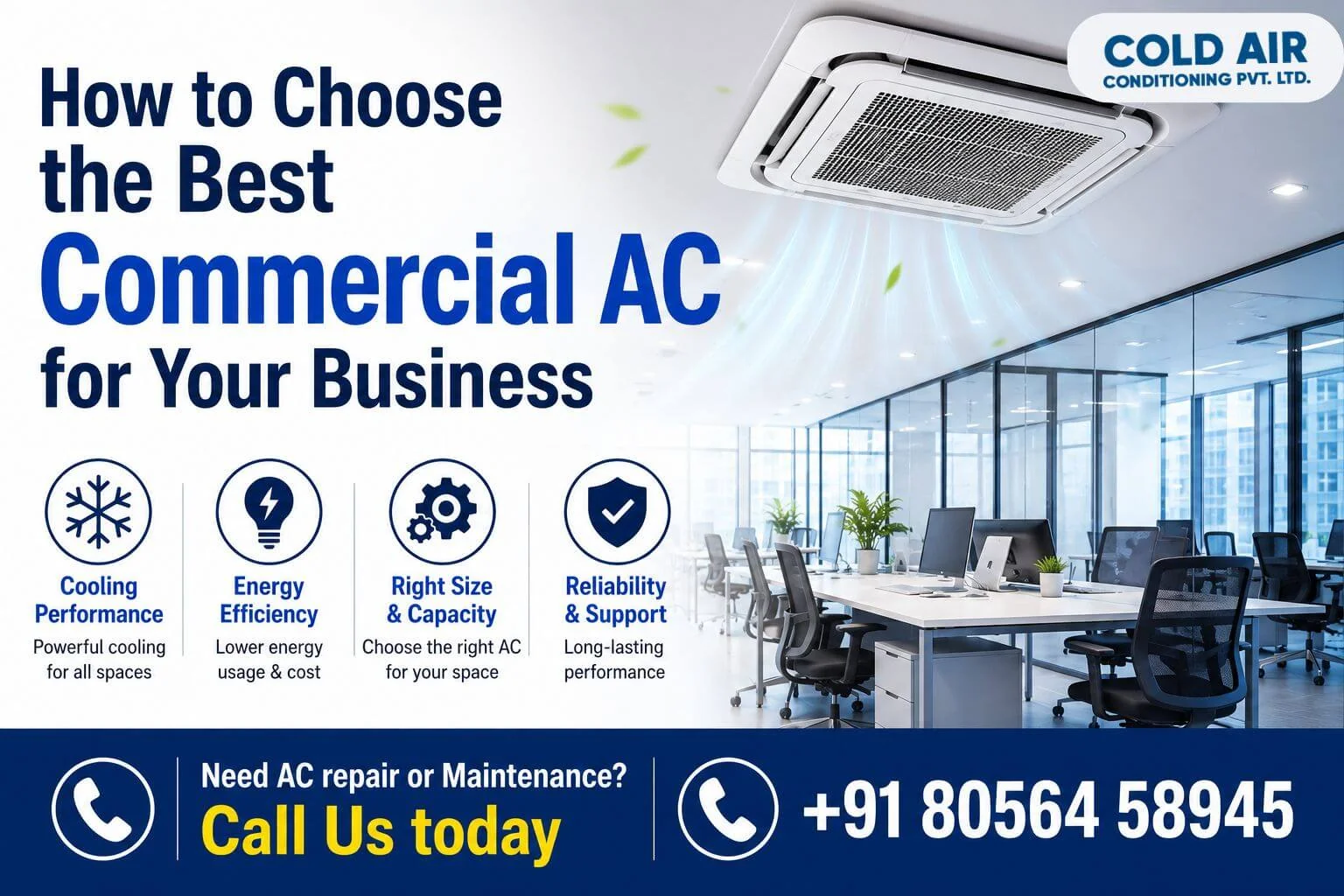
Running a business in a hot climate means air conditioning is more than a comfort feature. In a showroom, customers need to feel comfortable while they browse. In an office, employees spend several hours working under the same conditions. In a restaurant, heat from the kitchen can make the indoor environment even more difficult to manage.
This is why the AC you choose should match the way your business actually works. Room size matters, but so do the number of people inside, working hours, sunlight, ventilation, equipment and the layout of the building.
If you are comparing options for the best commercial AC in Thuckalay, look beyond the price tag. A suitable system should provide consistent cooling, work efficiently during business hours and be practical to maintain over the years.
Why Commercial AC Selection Needs Proper Planning
A commercial space is not used in the same way as a home. A small office may have a few employees working throughout the day. A clothing showroom may have customers entering frequently, large glass windows and strong afternoon sunlight. A restaurant may have additional heat coming from cooking equipment.
Because of these differences, two buildings with the same floor area may need different AC solutions. Before speaking to an AC dealer, note down a few basic details about the premises:
- • Total area that needs cooling
- • Number of rooms or sections
- • Number of people normally inside
- • Average working hours
- • Window and glass area
- • Direct sunlight
- • Equipment that produces heat
- • Ceiling height and available installation space
Giving these details to the dealer makes it easier to recommend an AC based on your actual usage, rather than just the size of the room.
Don't Choose AC Capacity by Size Alone
One common mistake is to decide the AC capacity only from the size of the room. A room with large glass windows facing the afternoon sun can need more cooling than an enclosed room of the same size. The number of people, ventilation, insulation and heat-producing equipment can also affect the cooling requirement.
When you receive a recommendation, ask the dealer why that particular capacity has been suggested. This can help you understand whether the recommendation is based on the actual conditions of your business.
An AC that is too small may struggle to cool the space. Choosing a much larger system than required is not automatically a better option either. The aim should be to select a system that suits the building and its usage.
Choose the Right Type of Commercial AC
Once the cooling requirement is understood, you can look at the type of AC that suits the property. Cold Air Conditioning lists Split, Cassette, Floor Standing, Ducted AC and VRV systems among its commercial AC options. Each type has a different use.
1. Split AC
Split ACs can be practical for offices, individual rooms, cabins and smaller commercial spaces. They can also be useful when different rooms have different usage times.
2. Cassette AC
Cassette ACs are installed in the ceiling and distribute air across the room. They can work well in open offices, retail spaces and other commercial areas where the ceiling is suitable for installation. Before choosing one, check the space above the false ceiling for wiring, lights and other services.
3. Floor-Standing AC
A floor-standing AC can be considered when there is enough floor space but the property is not suitable for certain ceiling-mounted options. Cold Air Conditioning's commercial floor-standing AC page features Daikin systems with practical features including an antimicrobial filter, filter indication and self-diagnostic functions.
4. Ducted AC
Ducted AC systems need more planning because ducts have to be accommodated within the building. They can be suitable for larger offices and commercial spaces where several areas need to be cooled through a planned air distribution system. If the building is under construction or renovation, discuss ducted AC before completing the false ceiling.
5. VRV Systems
VRV systems are generally considered for larger commercial properties with several rooms or cooling zones. Since these systems require more planning, the building layout and individual cooling requirements should be assessed before choosing this option.
Plan the Installation Along With the Interior Work
The indoor unit needs to be positioned properly so that air can circulate through the space. The outdoor unit needs sufficient ventilation and access for future service. Drainage, piping and electrical connections also need to be planned.
If your commercial property is still being built or renovated, include the AC requirement in the planning stage. Completing the false ceiling and electrical work before deciding the AC position can require changes later.
Consider the Running Cost
The purchase price is not the only expense you should consider. A commercial AC may operate for eight, ten or even twelve hours every day. When comparing options, look at the purchase price, installation cost, number of units required, expected operating hours, energy consumption, maintenance requirements and repair costs.
The cheapest AC at the time of purchase may not always be the most economical option in the long run. What matters is whether the system is appropriate for your business.
Don't Forget About Maintenance
Commercial ACs often work harder than residential systems because they are used for longer hours. Dust can collect on filters and outdoor coils, and electrical connections may need inspection. Regular maintenance can help keep the system working properly and identify problems before they become bigger repairs.
For businesses looking for commercial air conditioning service in Thuckalay, discuss future service requirements before purchasing the system.
What Should You Ask a Commercial AC Dealer?
When comparing commercial AC dealers in Nagercoil, do not compare only the final price. Ask what is included in the quotation and why the particular system has been recommended.
- • Why is this AC type suitable for my premises?
- • How was the required capacity decided?
- • How many units do I need?
- • Where will the indoor and outdoor units be placed?
- • Is installation included?
- • Are electrical or civil works extra?
- • What maintenance will be required?
- • What service support is available after installation?
Two quotations can have different prices because the work included in each one may be different. Understanding the details before signing can help avoid additional costs later.
Why Choose Cold Air Conditioning for Your Commercial AC?
At Cold Air Conditioning, we provide commercial AC solutions for businesses in and around Nagercoil and Thuckalay. As a Daikin Authorized Channel Partner, we offer Split, Cassette, Floor Standing, Ducted AC and VRV systems.
Our team handles commercial requirements from individual business spaces to larger properties that need detailed cooling arrangements. We also provide installation, maintenance, repair, cleaning and gas filling services, so customers can get support beyond the initial purchase.
If you are planning a new commercial AC installation or need to replace an existing system, contact Cold Air Conditioning to discuss your space and cooling requirements.
Choose an AC That Fits Your Business
The cheapest model is not always the right choice, and a higher-capacity AC is not automatically better either. Start with the premises: look at occupancy, operating hours, sunlight, heat sources, installation, electricity consumption and maintenance along with the purchase price.
Frequently Asked Questions
1. What is the best commercial AC for a shop?
It depends on the size, layout, occupancy, sunlight and operating hours of the shop. Split, cassette or floor-standing systems may be suitable depending on the property.
2. Can I choose an AC based only on the floor area?
No. Floor area is only one factor. Occupancy, ventilation, insulation, sunlight and equipment inside the building can also affect cooling requirements.
3. Is a floor-standing AC suitable for commercial use?
It can be suitable when there is enough floor space and the installation conditions are appropriate. Cold Air Conditioning offers Daikin floor-standing systems as part of its commercial AC range.
4. How often should a commercial AC be serviced?
The required frequency depends on usage and operating conditions. Cold Air Conditioning recommends regular maintenance and states that Daikin ACs should be serviced every six months.
5. Does Cold Air Conditioning provide service in Thuckalay?
Yes. Cold Air Conditioning provides AC installation, maintenance and repair services in Thuckalay.